
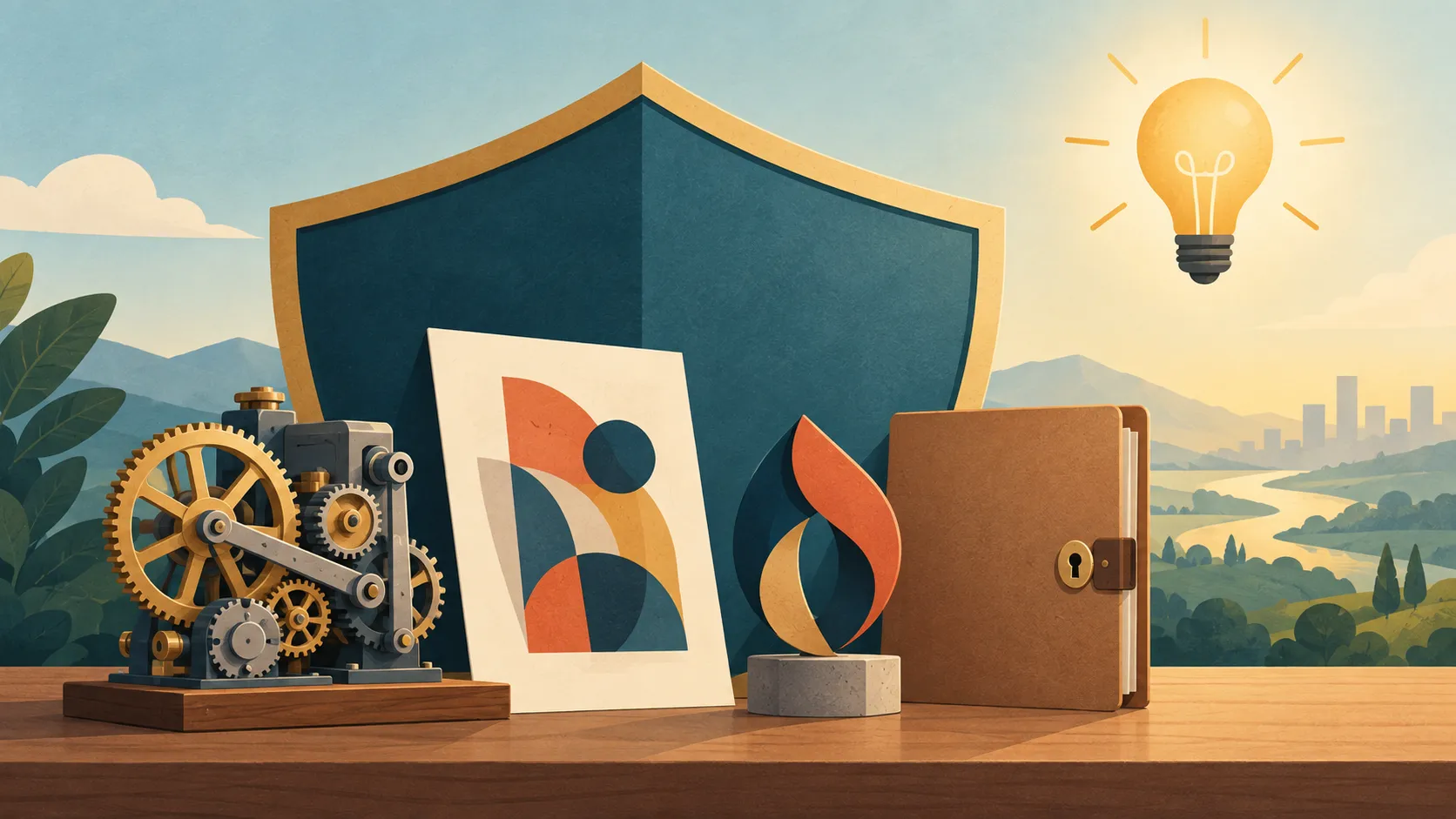
Safeguarding Ideas: Basics of Intellectual Property (IP) for Startups
A founder's guide to patents, trademarks, copyright and trade secrets, and what not to protect.
You have an idea you believe in, and a small voice keeps asking what happens if someone steals it. That worry is normal, and most founders feel it.
Intellectual property (IP) is the set of legal tools that let you own what your mind creates. For startups, the basics of IP matter early, because a few cheap steps now prevent painful fights later. Here's the good news: you don't need to protect everything. Much of what you build can't be protected anyway.
What intellectual property means for your startup
IP covers creations of the mind that the law lets you own, license, or sell. Think of inventions, brand names, code, content, and know-how.
Each type protects something different, with its own cost and rules. So don't ask how to protect your startup. Ask which parts are worth protecting, and with which tool.
Here are the main types, starting with the one founders ask about most.
Patents: protecting how something works
A patent protects an invention. That could be a new device, a chemical process, or a new technical method.
To get one, your invention must be new, not obvious to an expert, and useful in practice. In exchange, you publish how it works. You then get the right to stop others from using it, usually for up to 20 years.
Patents are slow and expensive, and each extra country adds cost. They make the most sense in deep tech, hardware, and biotech, where investors often expect a patent strategy.
One rule catches many founders off guard. In many countries, sharing your invention in public before filing can cost you the right to patent it. A demo day pitch or a detailed blog post can count. If you might have something patentable, see a patent attorney before you show it off.
Software is trickier. In Europe, software on its own is hard to patent, and rules differ by country.
Next comes the tool that protects your name, which matters to almost every startup.
Trademarks: protecting your brand
A trademark protects the signs customers use to recognise you. That means your company name, product name, logo, and sometimes a slogan.
Unlike patents, trademarks are affordable. They can last forever if you keep using and renewing them.
Here's where many founders slip. Registering a company or buying a domain doesn't give you trademark rights.
Say you're building a booking app with a catchy name. Another business may already hold that trademark in your category. You could be forced to rebrand after building an audience.
Before you fall in love with a name, run a trademark search in your target countries. Then register it in the classes that cover your products. Descriptive names, like calling a booking app "Easy Booking", are hard to register. Invented or distinctive names are easier to protect.
Next is the protection you get without filing anything: copyright.
Copyright: protecting what you create
Copyright protects original creative work. For a startup, that means source code, website copy, designs, and videos.
The best part: in most countries, copyright arises the moment you create the work, with nothing to file.
There's a catch, though. Copyright protects the expression, not the idea behind it. Nobody can copy your code line by line, but anyone can write new code that does the same thing.
The bigger copyright risk for startups is ownership. If a freelancer, an agency, or a friend writes code for you, they may own it by default. The same can apply to anything a cofounder built before the company existed.
Make sure everyone who builds for your startup assigns their IP to the company in writing. Investors will check this during due diligence.
Some of your most useful assets don't fit any of these boxes. That's where trade secrets help.
Trade secrets: protecting what you keep quiet
A trade secret is valuable business information you keep confidential. Think of a pricing model, an algorithm, or a supplier list.
You don't register a trade secret. It stays protected only while you take reasonable steps to keep it secret. That means confidentiality agreements, limited access, and clear rules for your team.
For many early-stage startups, this is the most practical form of protection. It costs little and suits fast-moving teams.
Now for the part most guides skip: what you can't protect at all.
What IP can't protect
Many founders assume every part of their startup can be locked down. It can't.
An idea on its own isn't protectable. You can't own the idea of an app that matches dog walkers with busy owners. You can protect the specific things you build around it.
In most places, business models aren't protectable either. Neither are facts, public data, or general methods of doing business. Features are hard to protect without a patent, and most won't qualify for one.
This is why NDAs rarely help at the pitch stage. Most investors won't sign one, since they hear similar ideas every week.
So if IP can't cover everything, how do you decide what's worth the effort?
Not everything needs protecting
Protecting IP costs money, time, and focus. Early on, those are your scarcest resources.
Ask three questions about each asset. Is it central to how you'll win? Could a competitor copy it with ease if you left it unprotected? Will investors or buyers expect protection here?
If the answer to all three is no, let it go. Your speed and your understanding of customers are often your strongest moat. Neither one needs a filing.
A sensible starting kit for most startups looks like this:
- IP assignment agreements signed by every founder, employee, and contractor
- A trademark search and registration for your main brand name
- Confidentiality agreements for anyone with access to sensitive information
- A talk with a patent attorney, but only if you have a technical invention
Everything else can wait until you have traction and funding. With that list in mind, here's where to start.
Your next step: a one-hour IP check
Block one hour this week for a basic IP check. List what you've created so far, who created it, and whether the company owns it. Then search for your name in the trademark databases of your main markets.
That small effort fixes the most common IP problems before they cost you. Protect what matters, let go of what doesn't, and put the rest of your energy into building.
This article is general information, not legal advice. Laws differ by country, so talk to a qualified lawyer about your situation.
Ready to Move Faster?
Get actionable feedback and insights on your challenges and goals. 30 minutes focused on helping you move forward.
No sales pitch. No obligations. Just helpful advice.